


Biotechnology
Biotechnology, in its general definition, is a multidisciplinary branch of science that uses biological methods to provide solutions aimed at facilitating and improving human life, health, society, and living conditions. Biotechnology, which is utilized in many fields such as health, industry, agriculture, energy, and food, is increasingly developing and expanding in our country as well. As a company, our goal is to be a pioneer in this development with the biotechnological products we work on in our high-tech laboratories and to contribute to human health and the national economy.
Although its history dates back to the early 20th century, biotechnology, which we now frequently hear about, has the potential to revolutionize human health through its applications in the pharmaceutical industry. Our awareness of this potential and the importance we place on human health have propelled our production efforts forward at full speed.
Biotechnological Drugs
In cases where the product is a protein, banks are created from living organisms (bacteria, mammalian cells, etc.) that will produce the target product using recombinant DNA technology. The first step in this process is to place the DNA sequence (gene) that codes for the desired recombinant protein into the appropriate organism that is intended to produce this product. At the end of this process, a pool of many cells containing the desired gene is obtained. Considering the targeted product quality and production capacity, the best cells from those available are selected. The selected cells are multiplied and stored under suitable cold conditions (like <-70°C) for use in production. These cells are now special cell banks prepared for that product. They must not contain any known pathogens and must be capable of secreting the protein stably and in quantities suitable for mass production.
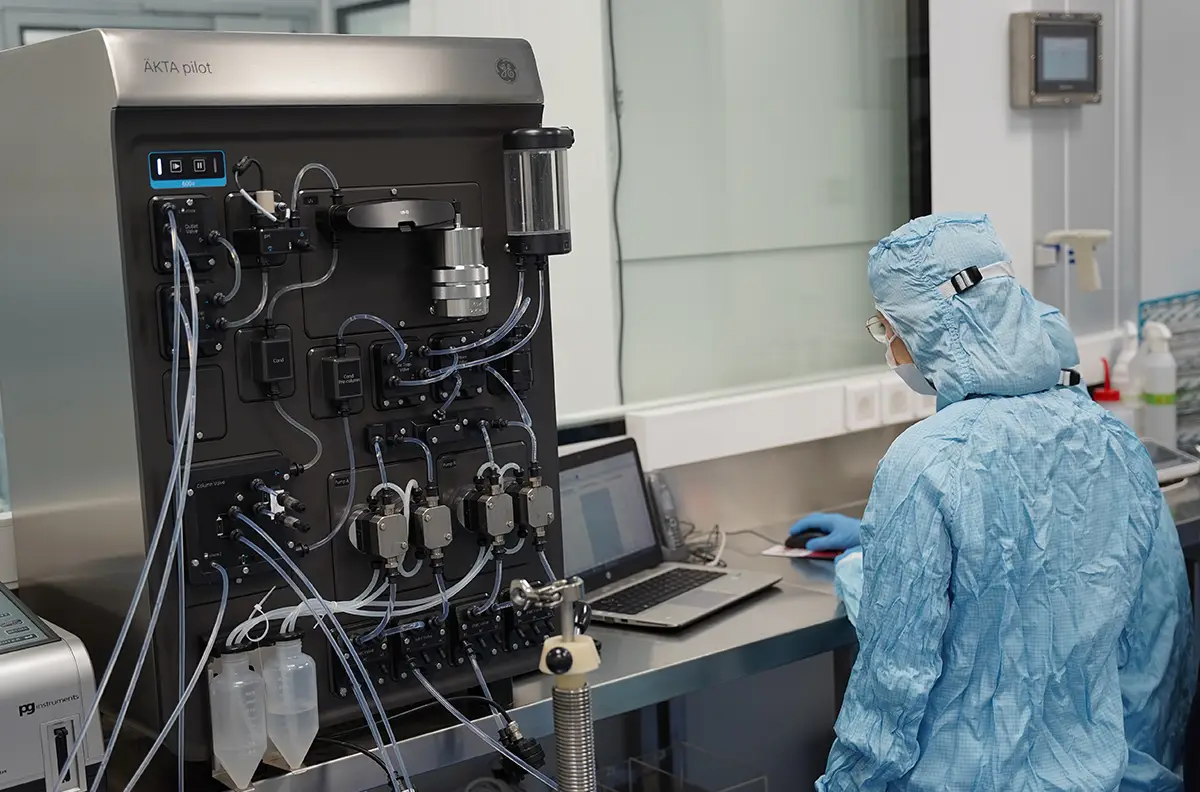
Protein production begins with thawing the frozen cells and growing them under appropriate media and environmental conditions. The cultures obtained by growing the cells at different production scales are purified using various separation methods. The processes through which the pure protein obtained from cell banks passes are referred to as biological processes (bioprocess). The products, once formulation processes are completed, are filled into suitable packaging (syringe, cartridge, vial, etc.) under aseptic conditions to become finished products.
Biosimilar Drugs
A biosimilar drug is a drug that shows similarity to a biological drug approved by regulatory authorities (reference drug). It is a version produced after the patent period of the reference biological drug has expired. The similarity of a biosimilar product to the reference product should be demonstrated through comparative quality, non-clinical, and clinical data obtained from various studies.
Developing a biosimilar drug is generally more costly and time-consuming than generic drugs due to the complexity of its active ingredients. The demonstration that a biosimilar drug is similar to the reference biological drug is examined by health authorities (such as the Turkish Medicines and Medical Devices Agency, FDA, EMA, etc.). Comparability studies should demonstrate that the quality, efficacy, and safety of the biosimilar product are similar to those of the reference/original product. Therefore, biosimilar and biological reference drugs are generally used to treat the same disease at the same strength.